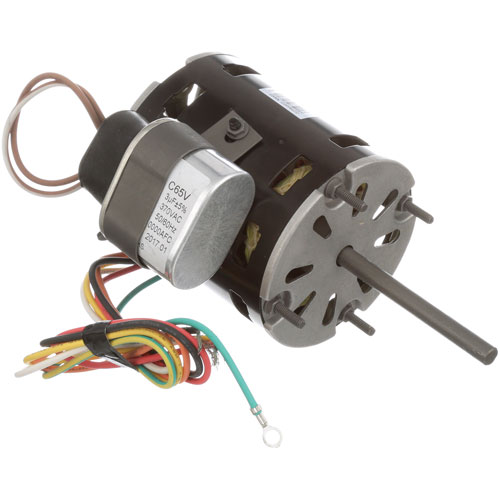

Carter Hoffmann 186140360 Fan Motor 1/20HP 115/230V 1PH
$285.01
Price reduced from
$571.40
Specifications:
| Attribute | Details |
|---|---|
| Fan Motor, [ 115/230V, ] [ 1/20 Hp, ] [1Ph ] | |
| [3250/2700 RPM ] W/Capacitor | |
| 5/16 X 3 Shaft, 2'' Ctr Stud Mounts, | |
| Carter Hoffmann Fh90,Th15, Th60, Th-U Sh15, | |
| Blower Wheel Use #26-2153 |
Description
The Carter Hoffmann 186140360 Fan Motor works on the concept of transforming electrical energy into mechanical energy, which drives the fan to move the air effectively in a system. It operates on a 115V and 230V power supply and provides a 1/20HP output to provide controlled airflow. The fan motor is made to fit into the existing equipment and is installed in a compartment or a housing where airflow control is necessary, so that it fits into the commercial system without further adjustment.
More Information:
- CARTER HOFFMAN:18614-0320 ,18614-0360 ,186140360 ,CAR18614-0320 ,CAR18614-0360
Step1: Disconnect the appliance from power to prevent electrical hazards before starting.
Step2: Remove panels or covers blocking access to the existing fan motor.
Step3: Detach the old motor carefully, noting wiring connections and orientation.
Step4: Mount the new motor securely and reconnect all wiring exactly as before.
Step5: Replace panels and fasteners to restore the enclosure fully.
Step6: Test motor operation to confirm smooth and proper rotation before use.
Customer Reviews
No reviews yet. Be the first to write one!
Write a Review
Thank you! Your review has been submitted.
-
What maintenance is required for the Carter Hoffmann 186140360 Fan Motor?
Inspect the fan motor in the unit for smooth operation and remove any dust or debris. Ensure proper ventilation and check wiring connections. Always disconnect power before performing maintenance.
-
What are common issues with the Carter Hoffmann 186140360 Fan Motor?
- Motor failing to run during operation.
- Weak airflow affecting temperature consistency.
- Overheating inside the unit.
- Unusual noise or vibration.
- Intermittent performance due to electrical faults.