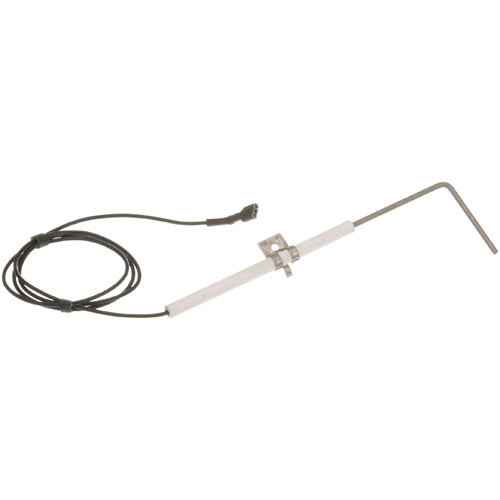
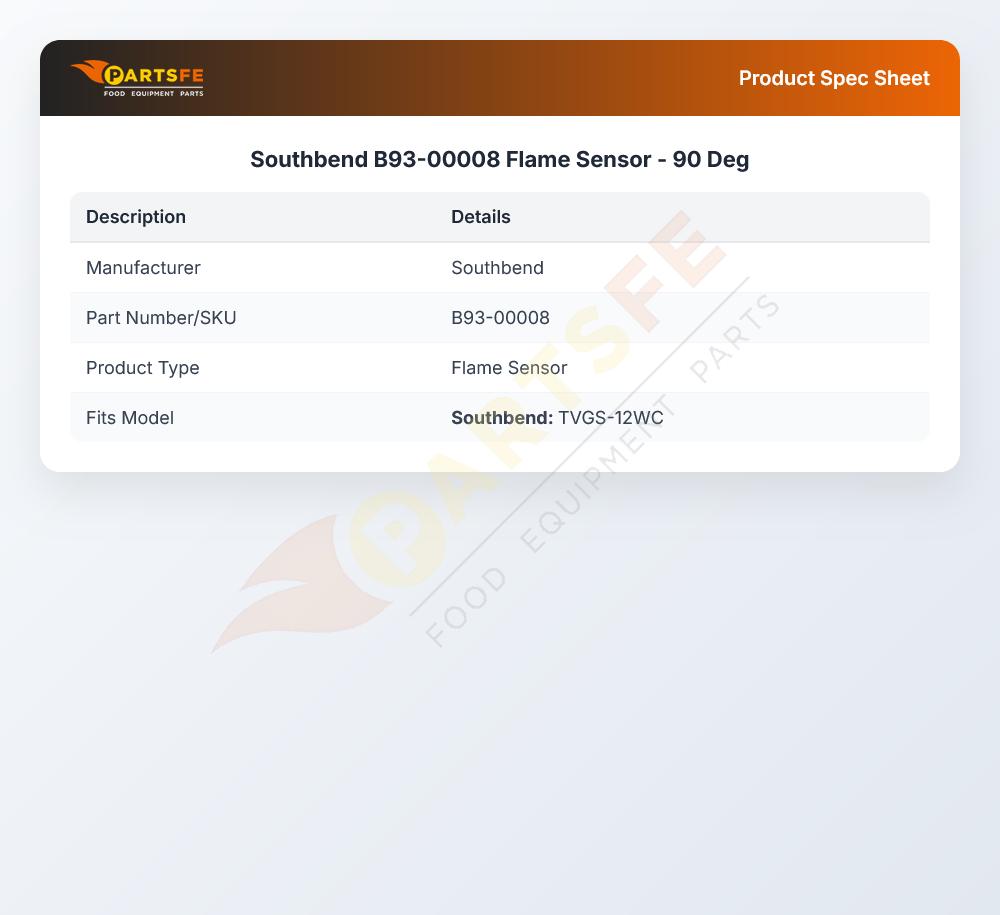

Southbend B93-00008 Flame Sensor 90°
Specifications:
| Attribute | Details |
|---|---|
| Null |
Description
More Information:
- MIDDLEBY MARSHALL:1175127||SOUTHBEND:1175127 ,1189311 ,1195448 ,B93-00008 ,B93-00020 ,SOU1175127 ,SOU1189311 ,SOU1195448
Step1: Turn off power and gas supply before starting.
Step2: Remove old flame sensor from burner assembly carefully.
Step3: Align sensor with mounting bracket.
Step4: Secure sensor using original screws tightly.
Step5: Reconnect wiring ensuring correct polarity.
Step6: Restore power and test ignition for safe flame detection.
Step7: Inspect wiring insulation for damage before reassembly.
Step8: Allow system to run and confirm stable flame signal operation.
Step9: Shut down if flame is not detected and recheck alignment.
Customer Reviews
No reviews yet. Be the first to write one!
Write a Review
-
What maintenance is required for the Southbend B93-00008 Flame Sensor?
Inspect and clean flame sensor rod regularly to remove carbon buildup affecting flame detection accuracy. Check wiring connections for corrosion or looseness, ensure proper alignment with burner flame, and test operation during routine inspections for stable performance and safety.
-
What are common issues with the Southbend B93-00008 Flame Sensor?
- Dirty or carbon-fouled sensor causing weak flame detection.
- Intermittent shutdown due to poor signal strength.
- Wiring corrosion or loose connections leading to signal loss.
- Misalignment with burner flame causing ignition failure.