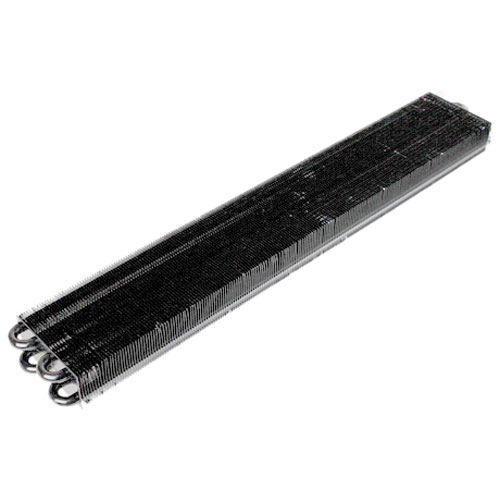
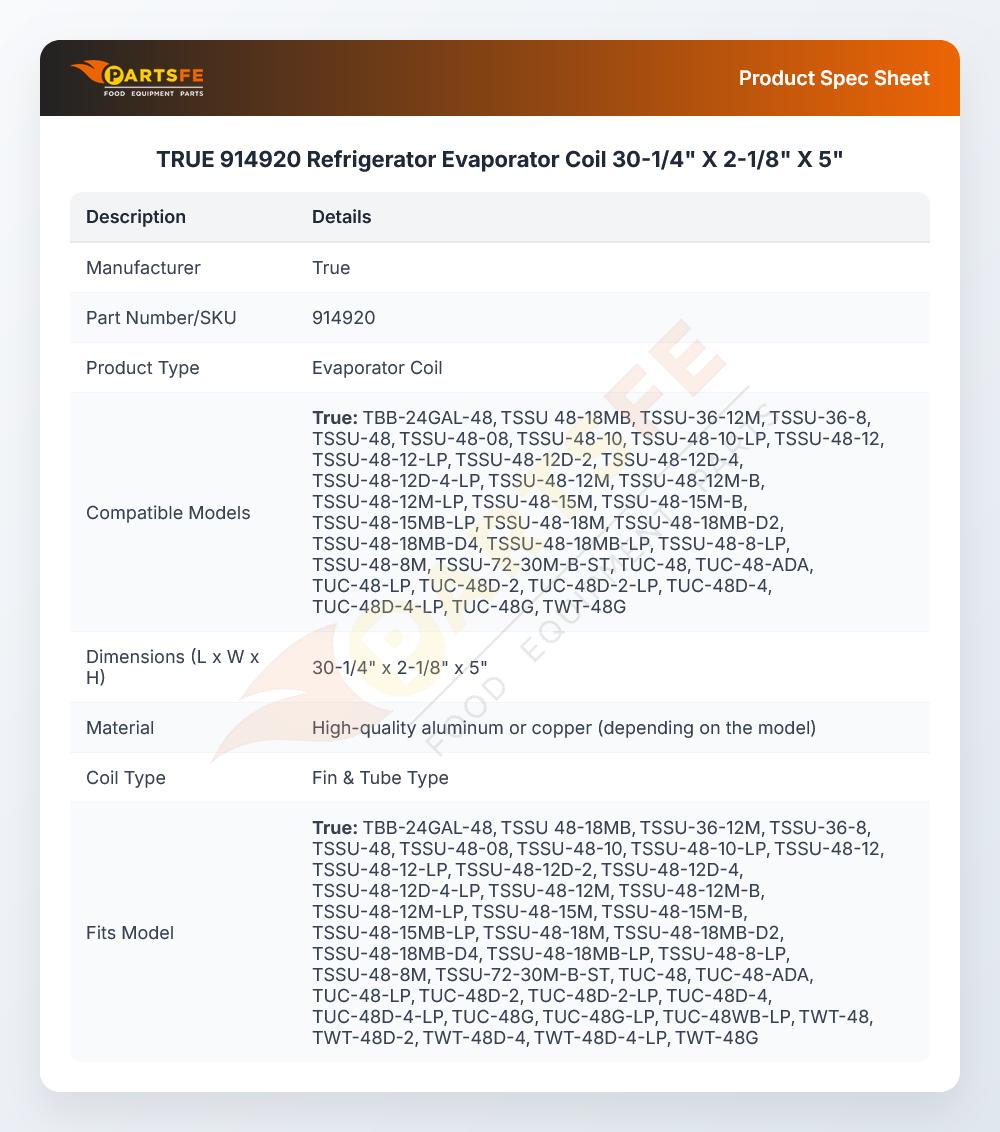
TRUE 914920 Refrigerator Evaporator Coil 30-1/4" X 2-1/8" X 5"
Specifications:
| Attribute | Details |
|---|---|
| Evaporator Coil | |
| 30-1/4" X 2-1/8" X 5" | |
| True T-50-Gc, Td-50-18, Tssu-48-8-47, Twt-48 |
Description
More Information:
- TRUE:800205 ,914920 ,E800205 ,E914920 ,TRUE914920
Step1: Disconnect refrigerator power supply and recover refrigerant safely before starting.
Step2: Remove old evaporator coil by detaching mounting brackets and tubing connections and inspect ports.
Step3: Position new evaporator coil and secure to evaporator plate with brackets align carefully.
Step4: Braze or connect refrigerant lines, ensuring leak-free joints and safety checks to prevent leaks.
Step5: Recharge refrigerant, and test for proper cooling operation, restore power after completion.
Customer Reviews
No reviews yet. Be the first to write one!
Write a Review
-
What maintenance is required for the TRUE 914920 Evaporator Coil?
Clean the refrigerator evaporator coil regularly to prevent frost and dust buildup and ensure efficient cooling. Check airflow and defrost system for proper operation. Inspect for refrigerant leaks and damaged fins.
-
What are common issues with the TRUE 914920 Evaporator Coil?
- Frost buildup on evaporator coil reducing cooling efficiency.
- Refrigerant leakage causing poor temperature control.
- Airflow restriction leading to uneven cooling.
- Coil freezing and defrost system failure.