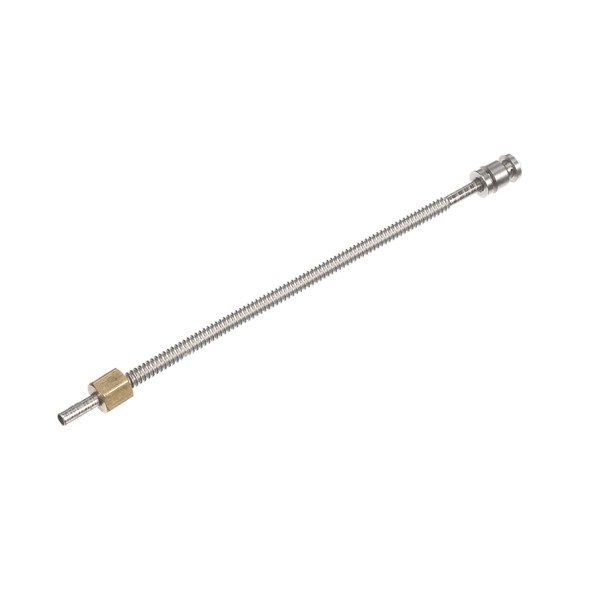

Rankin Delux RDLR-13 Broiler Pilot Tube
Specifications:
| Attribute | Details |
|---|---|
| Pilot Tube, | |
| 4-3/4" X 1-1/2" To Slott, 1-1/4" Turned Up, Other | |
| End Lighter Tube W/ Tip, With 3/16" Cct Nut & Sleeve, | |
| Rankin-Delux Broiler Series 23 |
Description
More Information:
- RANDELL:RDLR-13 ,RDLR13||RANKIN DELUX:RDLR-13 ,RDLR13
Step1: Turn off gas supply and main power, and allow equipment to cool completely.
Step2: Remove access panel to broiler assembly carefully.
Step3: Disconnect old pilot tube carefully using proper tools.
Step4: Position pilot tube securely in correct alignment.
Step5: Reconnect gas line fittings tightly and check seals.
Step6: Test for leaks using soap solution before ignition.
Step7: Reassemble panel and ignite pilot to verify steady flame.
Customer Reviews
No reviews yet. Be the first to write one!
Write a Review
-
What maintenance is required for the Rankin Delux RDLR-13 Pilot Tube?
Inspect tube for carbon buildup and blockages regularly. Clean gently to maintain proper gas flow and ignition performance. Ensure secure alignment and check for leaks during service intervals. Follow safety procedures when servicing gas components.
-
What are common issues with the Rankin Delux RDLR-13 Pilot Tube?
- Carbon buildup restricting flow.
- Weak or inconsistent pilot flame.
- Clogging from grease or debris.
- Misalignment affecting ignition.
- Wear leading to uneven gas distribution.
- Carbon buildup at nozzle ports.
- Partial blockage reducing heat output.