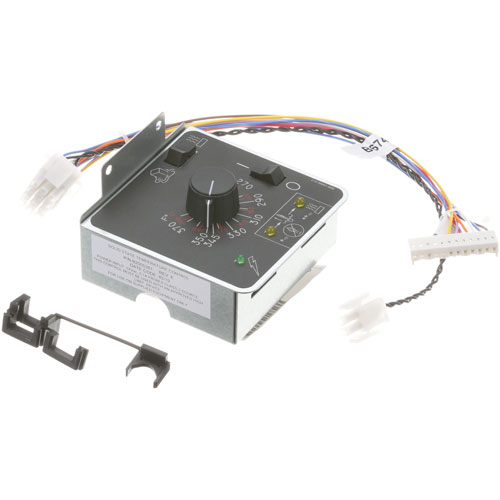

Pitco PTB2005301 Fryer Solid State Temperature Controller 24V 4-1/4" X 4-1/4"
$606.36
Price reduced from
$1,188.00
Specifications:
| Attribute | Details |
|---|---|
| Solid State Temperature Controller, 24V | |
| 4-1/4" X 4-1/4" 3 Lights, 2 Switches & 1 Temp Control, | |
| Wire Harness, 250-370F | |
| For Knob Use 22-1577 | |
| Pitco Fryer S14Rs |
Description
The Pitco PTB2005301 Fryer Solid State Temperature Controller is a small control unit with dimensions of 4-1/4” x 4-1/4” and voltage of 24V. It has three LED lights, two buttons and one knob for temperature regulation with the possibility to set the temperature from 250°F to 370°F. This controller improves the cooking efficiency by offering the right temperature, making the food to be cooked to have the right quality and the oil to last longer. Its solid-state structure allows for a fast rate of heat recovery , it is suitable for use in kitchens since it will provide the better results in the frying process.
More Information:
- MAGIKITCH'N:B2005301||PITCO:B2005301 ,PTB2005301
Step1: Disconnect the power and allow the fryer to cool fully before starting.
Step2: Remove the control panel to access the temperature controller unit.
Step3: Disconnect wiring and any sensor connections from the old controller.
Step4: Install the new controller and reconnect all wires correctly.
Step5: Secure the unit and reattach the control panel.
Step6: Restore power and verify accurate temperature regulation during operation.
Customer Reviews
No reviews yet. Be the first to write one!
Write a Review
Thank you! Your review has been submitted.
-
What maintenance is required for the Pitco PTB2005301 Solid State Temperature Controller?
Keep the fryer controller clean and inspect for proper calibration and wiring condition. Ensure stable mounting and avoid moisture exposure. Maintenance supports accurate temperature regulation and secure operation.
-
What are the common issues with the Pitco PTB2005301 Solid State Temperature Controller?
- Inaccurate temperature control during operation.
- Failure to maintain set heat levels.
- Electrical issues affecting controller performance.
- Delayed response to adjustments.
- Overheating of internal components.
- Calibration drift reducing accuracy.