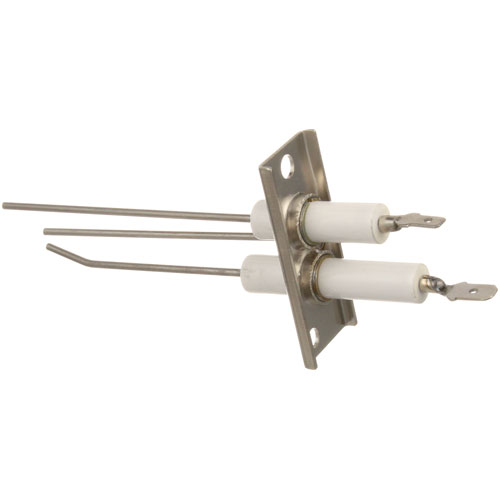
Cleveland KE53437-1 Spark Electrode
Specifications:
| Attribute | Details |
|---|---|
| Fenwal Spark Electrode, Used With Ignition Cable L282, | |
| W-1120, # 38-1339, Has 3 Probes, 1 Is Ground, | |
| 1 Has 1/4" Male Push-On, 1 Has 3/16" Male Push-On. | |
| Cleveland Kettle Kgt | |
| Skillet Sgl-30R | |
| Garland Oven Model Mco-Gs/Gd-10 | |
| Vulcan Oven Gco2C, Gco2D | |
| Wolf Oven Gco2C, Gco2D, Hgc20, Hgc20D |
Description
More Information:
Installed within commercial gas cooking equipment, this Fenwal spark electrode creates the spark needed to ignite burner systems during startup and operation. The electrode features a three-probe design with one ground probe, along with 1/4" and 3/16" male push-on terminals for electrical connection within compatible ignition assemblies. Used with ignition cable L282, the component helps support proper burner ignition and steady heating operation in commercial foodservice equipment exposed to frequent daily use. A damaged or worn spark electrode can lead to ignition problems, delayed burner lighting, or inconsistent heating performance during operation. Replacing a faulty electrode may help restore proper flame ignition, improve burner response, and maintain controlled heating cycles for normal equipment operation. The component is commonly used in commercial gas equipment where reliable ignition performance is important for cooking efficiency and safe startup operation.
Equipment Compatibility:
Commonly used as a Cleveland spark electrode ignition component for commercial steamers, kettles, skillets, and gas convection ovens, this Fenwal spark electrode supports reliable burner startup and ignition control during normal equipment operation. This spark electrode KE53437-1 is compatible with commercial equipment from leading brands such as Cleveland, Vulcan Hart, Garland, Hobart, U-Line, and more, where dependable ignition performance and controlled burner operation are required.
Brand Compatibility:
This spark electrode replaces multiple part numbers used across compatible commercial equipment models from brands such as Cleveland, Garland, Hobart, U-Line, and Vulcan Hart. Complete cross-reference details are provided separately for identification and ordering purposes.
Product Specifications:
Manufacturer: Cleveland
SKU: KE53437-1
Product Type: Spark Electrode
Ignition Type: Fenwal ignition component
Probe Configuration: 3 probes, including a ground probe
Terminal Connections: 1/4" and 3/16" male push-on terminals
Compatible Ignition Cable: L282
Application: Commercial gas cooking equipment
Key Features:
- Produces a spark for burner ignition
- Three-probe electrode configuration
- Includes a dedicated ground probe
- Supports stable ignition performance
- Push-on terminal connections for installation
- Helps restore proper burner startup
- Used in commercial gas cooking equipment
“Users commonly report improved ignition response and more consistent burner startup after replacing worn ignition electrodes.”
- CLEVELAND:1415200 ,CLE1415200 ,CLEKE53437-1 ,KE53437-1||GARLAND:1415200||HOBART:00-354444-00001 ,354444-00001 ,354444-1||U-LINE:10-866||VULCAN HART:00-354444-00001 ,354444-00001 ,354444-1
Step1: Turn off gas and power to the appliance.
Step2: Remove the old spark electrode from the burner assembly.
Step3: Clean the mounting area to remove grease and debris.
Step4: Install the new electrode ensuring the gap to the burner is correct.
Step5: Secure the electrode with the screws or clips provided.
Step6: Reconnect the ignition wire to the terminal.
Step7: Test ignition by activating the burner.
Customer Reviews
No reviews yet. Be the first to write one!
Write a Review
-
What maintenance is required for the Cleveland KE53437-1 Spark Electrode?
Inspect the spark electrode regularly for carbon buildup or cracks. Clean gently with a non-abrasive cloth and ensure proper alignment. Maintaining it ensures accurate ignition, prevents misfires, and reduces the risk of electrical shorts.
-
What are the common issues with the Cleveland KE53437-1 Spark Electrode?
- Failure to ignite or intermittent sparking.
- Carbon or soot buildup on the electrode tip.
- Cracks or damage.
- Loose or corroded electrical connections.