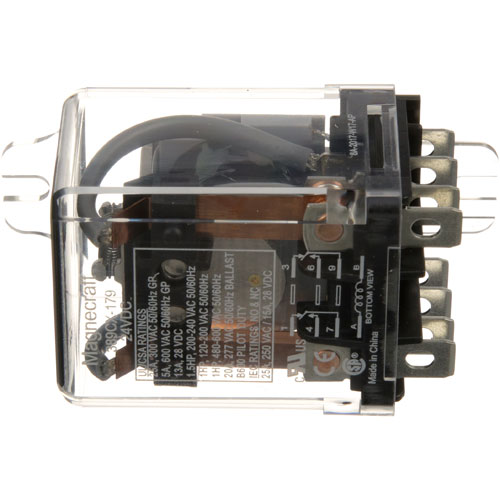

Turbochef TBC101273 2-Pole Relay 30A 24 VDC Class-F 2-Throw
Specifications:
| Attribute | Details |
|---|---|
| Relay, 2 Pole, | |
| 24Vdc, (8) 1/4" Tab Term | |
| Turbo Chef Convection Oven | Hhb, Hhb2, |
| Convection & Microwave Oven | Ngc, Ngc2, Ngo/Sota, I3, I5 |
Description
More Information:
Step1: Disconnect electrical power to the oven and follow lockout/tagout procedures.
Step2: Open the service panel and locate the existing relay.
Step3: Label and disconnect all wires from the old relay terminals.
Step4: Remove the mounting hardware and take out the old relay.
Step5: Install the new relay in the same position and secure it firmly.
Step6: Reconnect the wiring according to the equipment wiring diagram.
Step7: Reinstall the panel, restore power, and test the relay for proper switching operation.
Customer Reviews
No reviews yet. Be the first to write one!
Write a Review
-
What maintenance is required for the Turbochef TBC101273 Mechanical Relay?
Regularly inspect the relay for secure mounting and tight electrical connections to ensure accurate switching performance. Keep the unit free from dust, grease, and moisture buildup. Check for signs of overheating or contact wear. Always disconnect power before servicing to prevent electrical hazards.
-
What are common issues with the Turbochef TBC101273 Mechanical Relay?
- Contact wear leading to intermittent switching.
- Coil failure preventing relay activation.
- Overheating under continuous load.
- Loose or corroded terminal connections.
- Sticking or delayed relay response.