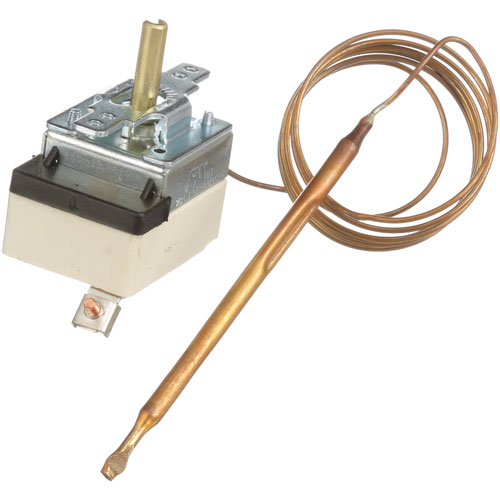

Bki (Barbeque King) T0095 Thermostat
Specifications:
| Attribute | Details |
|---|---|
| Thermostat, 250V, 450F | |
| Bulb = 3/16" X 4", Cap = 42" | |
| For Knob Order Oem #K0049 | |
| Barbecue King (Bki) Deli Case | |
| Csw, Cswhi, Ssw, Sswhi, Tcw, Tsw, Tswhi, | |
| Wdc, Wdchi |
Description
More Information:
Step1: Shut off electrical power and gas supply, then let the unit cool fully before beginning work.
Step2: Remove the front control panel to expose the thermostat assembly inside the control housing.
Step3: Disconnect and label all wiring connections for accurate reinstallation.
Step4: Fit the new thermostat, tighten mounting hardware, and reconnect wiring to the correct terminals.
Step5: Reassemble the panel, restore power, and confirm stable temperature response during operation.
Customer Reviews
No reviews yet. Be the first to write one!
Write a Review
-
What maintenance is required for the BKI (Barbeque King) T0095 Thermostat?
Inspect thermostat wiring and terminals regularly for tight connections and signs of overheating or corrosion. Keep the control area clean and free of grease buildup to ensure stable operation. Verify temperature calibration periodically for accuracy and adjust if necessary. Handle components carefully during servicing to avoid damaging internal sensing elements.
-
What are common issues with the BKI (Barbeque King) T0095 Thermostat?
- Incorrect temperature regulation or unstable readings.
- Equipment overheating or underheating due to sensor failure.
- Intermittent operation from loose or damaged wiring.
- Thermostat not triggering heating cycle properly.
- Calibration drift causing inconsistent cooking performance.