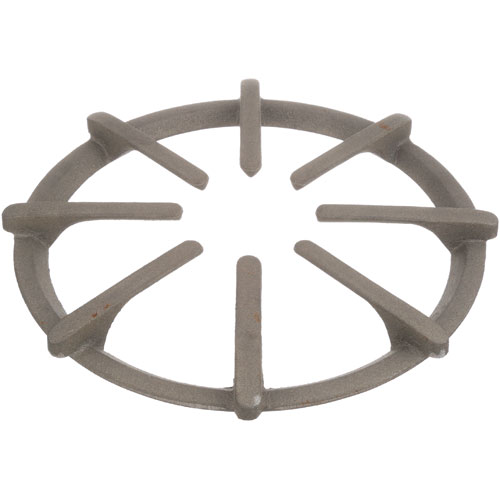
Vulcan Hart VH109432-1 Cast Iron Grate
Specifications:
| Attribute | Details |
|---|---|
| Rough Cast Iron Spider Grate | |
| 12-3/4" Dia, 12" Ring Dia) (Material Ci) | |
| 8 Equal Legs | |
| Vulcan | |
| Range 7845, H45, Sg7845. | |
| Series | Gh, Gm, Ghx. |
Description
More Information:
- HOBART:00-409432-00001 ,109432-1 ,409432-00001 ,409432-1||VULCAN HART:00-409432-00001 ,109432-1 ,409432-00001 ,409432-1 ,VH109432-1 ,VH409432-1
Step1: Turn off gas supply and ensure burners are completely cool.
Step2: Remove the old grate from the burner support ring.
Step3: Clean the burner frame surface to remove grease or debris buildup.
Step4: Align the new grate so all legs sit evenly on support points.
Step5: Place it carefully onto the ring and ensure stable seating.
Step6: Check for level placement and no rocking movement.
Step7: Restore gas and test flame distribution for proper burner operation.
Customer Reviews
No reviews yet. Be the first to write one!
Write a Review
-
What maintenance is required for the Vulcan Hart VH109432-1 Spider Grate?
Clean the grate regularly to remove grease, food residue, and carbon buildup that can affect burner performance. Inspect for cracks or warping from high heat exposure. Ensure proper seating on the burner for stable cookware support and safe operation.
-
What are common issues with the Vulcan Hart VH109432-1 Spider Grate?
- Rust formation due to moisture exposure.
- Cracking under heavy cookware loads.
- Uneven surface causing unstable pots.
- Carbon buildup affecting heat distribution.
- Chipping or surface erosion over time.